
CANCELADO 24/06 Participación ciudadana para cuidar el océano: de la sensibilización a la acción
Description
This summer course offers an intensive day to promote citizen participation in ocean protection. Through a combination of lectures, debate, participatory activities and a practical session on Ondarreta beach, attendees will learn how to transform themselves from observers to active agents through citizen science.
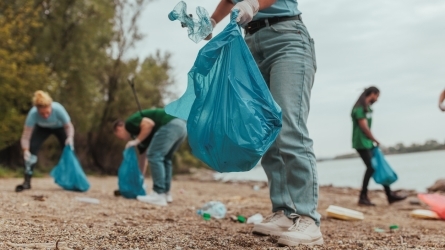
The morning session will bring together university researchers specialising in plastics and social impact, and Surfrider Spain, to share knowledge, data and inspiring experiences on marine pollution and citizen participation. In the afternoon, students will apply the European citizen science protocol "Ocean Initiatives", in a practical outing to collect data on marine litter.
In case of rainy weather, an alternative activity will be held, ‘The Plastic Mural,’ based on reflection and understanding of coastal waste and how the entire value chain of plastic ends up in the ocean, and where and how we can influence that value chain. The day will end with a call to action inviting participants to organise their own Ocean Initiatives action in the months following the course, encouraging them to remain active in protecting the ocean.
Objectives
Promote the transition from awareness to action through citizen science.
The course aims to provide technical and practical knowledge about the European Ocean Initiatives protocol so that anyone can understand how data collection is carried out, why it is useful, and how to replicate it in their own environment. Practical training will enable participants to acquire real autonomy to carry out citizen science actions and thus become citizens who are empowered to act in the care of the ocean.
Connect professionals, researchers and citizens in a space for exchange and collaboration.
The course is designed as an interdisciplinary meeting point where complementary perspectives can be shared: academic research, social action, coastal management and volunteer experience. This exchange aims to generate new synergies and facilitate future collaborations.
Raise awareness about the problem of marine litter and participatory solutions.
The morning session will provide scientific data, impact analyses and examples of citizen initiatives, allowing participants to understand the magnitude of the problem and the key role that society can play in solving it. The beach activity will reinforce this awareness by connecting theory with reality.
Activity directed to
- All public
- Jóvenes
Methodology
The course methodology combines participatory approaches, experiential learning and practical transfer of tools to ensure that participants not only acquire knowledge, but also develop real skills to promote citizen participation in ocean protection. The first part of the day (morning) will consist of short presentations, a round table discussion and participatory activities in which participants will work in groups on given questions.
Later (in the afternoon), there will be a practical workshop where participants will be trained in citizen science using Surfrider's European citizen science protocol. The course will provide participants with an initial context, organise a participatory methodology for them to express their ideas, and train them through experiential learning.
Program
09-07-2026
Presentation by the Director of the activity
Language: Basque
- Maria Ballesteros Rivas | Surfrider Foundation España - Responsable de educación y voluntariado
“Conociendo a Surfrider y cómo trabajamos“
Language: Spanish
- Maria Ballesteros Rivas | Surfrider Foundation España - Responsable de educación y voluntariado
Round table: “Impacto social y cuidado del océano: cómo la investigación, la ciencia y la participación ciudadana pueden unirse y mejorar nuestro entorno.“
- Maria Ballesteros Rivas | Surfrider Foundation España - Responsable de educación y voluntariado (Moderator)Language: Spanish
- Xavier Curto Zafra | Surfrider Foundation España - Coordinador de Surfrider en EspañaLanguage: Spanish
- Cristina Peña Rodriguez | UPV/EHU - Profesora Titular del Dpto. de Ingeniería Química y del Medio AmbienteLanguage: Spanish
- Antonio Casado da Rocha | UPV/EHU - Profesor de la Facultad de Educación, Filosofía y AntropologíaLanguage: Basque
Participative dynamics: “El papel de la ciudadanía: la importancia de la participación para cambiar las cosas“
Language: Spanish
- Xavier Curto Zafra | Surfrider Foundation España - Coordinador Surfrider en España
- Cristina Peña Rodriguez | UPV/EHU - Profesora Titular del Dpto. de Ingeniería Química y del Medio Ambiente
- Antonio Casado da Rocha | UPV/EHU - Profesor de la Facultad de Educación, Filosofía y Antropología
Break
“Cómo organizar una acción de ciencia ciudadana: el programa Ocean Initiatives/Retrace!“
Language: Spanish
- Maria Ballesteros Rivas | Surfrider Foundation España - Responsable de educación y voluntariado
- Xavier Curto Zafra | Surfrider Foundation España - Coordinador de Surfrider en España
Synthesis
Break
Participative dynamics: “Mural del Plástico de Surfrider (actividad secundaria - sólo si el tiempo es lluvioso)“
Language: Spanish
- Maria Ballesteros Rivas | Surfrider Foundation España - Responsable de educación y voluntariado (Dinamizator)
- Xavier Curto Zafra | Surfrider Foundation España - Coordinador de Surfrider en España (Dinamizator)
Participative dynamics: “Práctica de recogida de datos de basuras marinas en la playa de Ondarreta* (si el tiempo lo permite)“
Language: Spanish
- Maria Ballesteros Rivas | Surfrider Foundation España - Responsable de educación y voluntariado (Dinamizator)
- Xavier Curto Zafra | Surfrider Foundation España - Coordinador de Surfrider en España (Dinamizator)
Closing session
Language: Basque
- Maria Ballesteros Rivas | Surfrider Foundation España - Responsable de educación y voluntariado
Directors

Maria Ballesteros Rivas
Surfrider Spain, Head of Education and Volunteering
Marine biologist specialized in marine conservation. Experienced in environmental education, community mobilisation and volunteer management in ocean conservation organisations. Passionate about the sea, committed to environmental awareness and formal and informal education. More info: https://www.linkedin.com/in/mariaballesterosrivas/
Speakers
Maria Ballesteros Rivas
Surfrider Spain, Head of Education and Volunteering
Marine biologist specialized in marine conservation. Experienced in environmental education, community mobilisation and volunteer management in ocean conservation organisations. Passionate about the sea, committed to environmental awareness and formal and informal education. More info: https://www.linkedin.com/in/mariaballesterosrivas/

Antonio Casado da Rocha is a researcher and professor of philosophy at the University of the Basque Country (UPV/EHU), where he currently leads the area of Responsible Research. He has served on the Clinical Ethics Committee of Donostia Hospital and received the Bioethics Research Award from the Víctor Grífols i Lucas Foundation. His career combines extensive interdisciplinary academic work with experience in university management and the promotion of the social impact of knowledge.

Xavier Curto Zafra
Xavier Curto Zafra es biólogo por la Universidad de Barcelona con Máster en Ecología Terrestre y gestión de la Biodiversidad por la Universidad Autónoma de Barcelona. Trabaja en la delegación española de la ONG Surfrider Foundation Europe, dedicada a la protección de los océanos y el litoral a través de 3 áreas temáticas principales (basuras marinas, cambio climático y calidad de agua) y 4 ejes de acción (educación, voluntariado, investigación e incidencia política). Dentro de la ONG, Xavier desarrolla, entre otras cosas, el trabajo de incidencia política y el apoyo a las denuncias de activistas locales, a través del programa Coastal Defenders y la relación con el sector corporativo.
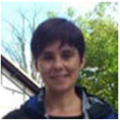
Cristina Peña Rodriguez
UPV/EHU
Dra. Cristina Peña Rodriguez, es Licenciada en Química, especialidad Petroquímica, y Doctora en Ingeniería de Materiales en la Universidad del País Vasco. Forma parte del grupo de investigación ‘Materiales+Tecnologías' desde el año 2000, y actualmente es Profesora Agregada del Dpto. de Ingeniería Química y del Medio Ambiente de la Escuela Politécnica de Donostia-San Sebastián.
Registration fees
| Face-to-face | Until 09-07-2026 |
|---|---|
| 48,00 EUR | |
| 41,00 EUR | |
| 34,00 EUR | |
| 25,00 EUR | |
| 41,00 EUR | |
| 41,00 EUR | |
| 41,00 EUR | |
| 41,00 EUR |
Venue
Miramar Palace
Pº de Miraconcha nº 48. Donostia / San Sebastián
Gipuzkoa
Miramar Palace
Pº de Miraconcha nº 48. Donostia / San Sebastián
Gipuzkoa
Sustainable development goals
Agenda 2030 is the new international development agenda approved in September 2015 by the United Nations. This agenda aims to be an instrument to favour sustainable human development all over the planet, and its main pillars are the eradication of poverty, a reduction in equality and vulnerability and fostering sustainability. It is a unique opportunity to transform the world up to 2030 and guarantee human rights for all.
4 - Quality education
Guarantee quality education that is inclusive and equitable and foster opportunities for lifelong learning for everyone. Key issues: free-of-charge, equitable and quality education, access to higher education and training on an equal basis, education for sustainable development, suitable education centres for persons with disabilities, and safe, non-violent and efficient learning environments.
More information
11 - Sustainable cities and communities
Make cities and other human settlements inclusive, safe, resilient and sustainable. Key issues: access to suitable housing and basic services that are secure and affordable, suitable and sustainable transport systems, inclusive urban planning, participative planning and management, protection of cultural and natural heritage, air-quality, green zones, and connections between urban, peri-urban and rural areas.
More information
12 - Responsible consumption and production
Guarantee sustainable modalities of consumption and production. Key issues: sustainable management and efficient use of natural resources, reduction of chemical particles released to the atmosphere, water and soils, reduction of waste products, recycling, reuse and reduction, sustainable practices, sustainable public procurement, sustainable lifestyles, rationalisation of inefficient subsidies for fossil fuels.
More information
13 - Climate action
Adopt urgent measures to combat climate change and its effects. Key issues: mitigation, resilience and capacity for adaptation, planning, national strategies and plans, education and raising awareness, reduction of effects and early warning systems, compliance with the Framework Convention of the United Nations on Climate Change.
More information
14 - Life below water
Conserve and sustainably use the oceans, seas and marine resources for sustainable development. Key issues: reduction of marine pollution and acidification of the oceans, protection of marine ecosystems, re-establishment of the health and productivity of the oceans, conservation de coastal and marine areas, elimination of over-fishing and poaching, support for traditional fishing, increased scientific knowledge.
More information
17 - Partnerships for the goals
Strengthen the means of implementation and revitalise the World Alliance for Sustainable Development. Key issues: mobilisation of resources, 0.7% of GDP for official overseas development aid, finances, cooperation in technology and innovation, ecologically rational technologies, skills building, universal and multilateral trade system, coherence on the legislative and institutional levels, availability of data, supervision, indicators and accountability.
More information
Other events of your interest
-

Face-to-face
-

Streaming
-
Face-to-face
-
Face-to-face
-
Face-to-face
-
Streaming
-
Face-to-face