
Taller de Medición Ambiental: IA para la Protección y Evaluación del Medio Ambiente
Description
La Escuela Avanzada de Medición Ambiental de Ihobe, en colaboración con EUSTAT, tiene como propósito impulsar la mejora del medio ambiente en Euskadi mediante una medición precisa, rigurosa y basada en el conocimiento. La recopilación y el análisis de indicadores ambientales no solo permiten evaluar el estado actual del entorno, sino que también constituyen herramientas esenciales para identificar oportunidades de mejora y orientar políticas públicas efectivas.
En la actualidad, la incorporación de la Inteligencia Artificial en la elaboración y el perfeccionamiento de estos indicadores está transformando profundamente el ámbito de la medición ambiental. Su uso posibilita avances significativos en la interpretación de datos complejos y en la generación de soluciones innovadoras para afrontar los retos ambientales de Euskadi y sus implicaciones económico‑sociales.
Objectives
Impulsar una comunicación transparente y rigurosa dirigida a la ciudadanía sobre el estado del medio ambiente en Euskadi, destacando la importancia de una medición precisa como base para la toma de decisiones y la mejora continua del entorno.
Promover el análisis, actualización y evolución de los indicadores ambientales, poniendo el foco en su utilidad para identificar áreas de mejora y orientar políticas eficaces, especialmente mediante la integración de técnicas avanzadas de Inteligencia Artificial.
Impulsar la colaboración entre instituciones, comunidad científica y ciudadanía para consolidar una cultura de datos abiertos y el uso responsable de herramientas de IA, facilitando la adopción práctica de los indicadores en decisiones públicas y en acciones cotidianas.
Activity directed to
- All public
- University student
- Teachers
- Professionals
Organised by
Program
09-09-2026
Institutional Opening session. Speaking order:
Language: Basque
Simultaneous translation: Spanish
- Idoia Otaegui Aizpurua | Fundación Cursos de Verano UPV/EHU - Directora Académica
- Leire Garmendia Arrieta | EHU - EHUko Idazkari Orokorra
- Alexander Boto Bastegieta | Ihobe - Director General
Presentation by the Director of the activity
Language: Spanish
Simultaneous translation: Basque
- Leire Elduayen Olleta | Ihobe - Estrategia e Innovación
“IA al Servicio del Medio Ambiente: Retos y Oportunidades“
Language: Spanish
Simultaneous translation: Basque
- Irantzu Sádaba Zubiri | Agencia Europea de Medio Ambiente (EEA) - Jefa de unidad – Transformación digital y servicios de tecnología
Round table
Language: Spanish
Simultaneous translation: Basque
Del dato a la decisión: claves para una gobernanza eficiente
- Belen Muñiz Villanueva | EUSTAT - Directora
IA aplicada a los informes ambientales en Cataluña: innovación para una administración más eficiente
- Marc Vilahur Chiaraviglio | Generalitat de Catalunya - Director general de Políticas Ambientales y Naturaleza
Avance del estado del medio ambiente de Euskadi y retos en la monitorización de los datos ambientales
- María García Flecha | Ihobe - Directora Estrategia e Innovación
Coffee break
Round table: “Talleres IA for Green: Conectando Personas, Datos y Medio Ambiente“
Language: Spanish
1.Detectives del Medio Ambiente: Explora, Mide y Descubre con IA (taller para Estudiantes / Juventud)
- Javier Del ser Lorente | UPV/EHU - Docente & Investigador
- Ibai Laña Aurrekoetxea | Mondragon Unibertsitatea - Docente & Investigador
2..Del dato a la decisión: Cómo integrar indicadores en políticas públicas (Taller para Administración Pública)
- Marc Vilahur Chiaraviglio | Generalitat de Catalunya - Director general de Políticas Ambientales y Naturaleza
3.Tu entorno en datos: Cómo leer e interpretar el Estado del Medio Ambiente de Euskadi (Taller para Ciudadanía)
- Laura Santamaria Moreno | UPV/EHU - Postdoctoral Junior Leader Fellow – Fundación “la Caixa”
Participative dynamics: “Síntesis de la jornada“
Language: Spanish
Simultaneous translation: Basque
- Leire Elduayen Olleta | Ihobe - Estrategia e innovación
- Virginia Gomez Ortega | Ihobe - Responsable de Transformacion digital
Closing session
Language: Basque
Simultaneous translation: Spanish
- Alexander Boto Bastegieta | Ihobe - Director General
Directors
Leire Elduayen Olleta
IHOBE
A graduate in Chemistry from the University of the Basque Country, she has spent her entire professional career at Ihobe. Since its inception, she has been involved in the development, implementation, and continuous improvement of the management system, being responsible for certifications in quality, environment (EMAS), innovation, and monitoring. Subsequently, she has collaborated in the design and development of tools, methodologies, and support services aimed at facilitating environmental improvement in Basque companies. She currently develops and promotes the efficient implementation of environmental planning, based on informed decisions and the integration of environmental criteria into all Basque Country policies, in line with European guidelines.
Speakers
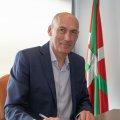
Alexander Boto Bastegieta
Bachelor Degree in Economics and Master Degree in Spatial Planning and Environment from the London School of Economics. European Commission expert on Environmental and Economical Competitiveness. He was Director of Environment and Climate Change in the Basque Government. He worked for more than 20 years in Ihobe, the Government's public environmental management company, as the person responsible for environmental planning. Currently he is the General Manager of Ihobe. In his academic facet, he has lectured in postgraduate courses in different Universities on subjects such as: Agenda 2030, Environmental Innovation, Circular Economy and Climate Change.
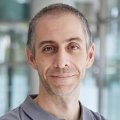
Javier Del ser Lorente
Javier Del Ser defendió su primera tesis doctoral (Cum Laude) en Ingeniería de Control y Electrónica Industrial en la Universidad de Navarra (2006), y una segunda tesis doctoral en Tecnologías de la Información y las Comunicaciones (también Cum Laude y galardonada con el Premio Extraordinario de Doctorado) en la Universidad de Alcalá de Henares (2013). Actualmente es Investigador Principal en Inteligencia Artificial aplicada en TECNALIA RESEARCH & INNOVATION e Investigador Distinguido del Departamento de Matemáticas de la Universidad del País Vasco (EHU/UPV). Sus intereses de investigación se centran en el desarrollo de Inteligencia Artificial confiable y fiable, además de otras áreas en IA aplicada como el aprendizaje automático, el aprendizaje profundo y la computación evolutiva. Hasta la fecha ha publicado cerca de 500 contribuciones científicas a congresos y revistas de primer nivel. Ha dirigido 20 tesis doctorales y participado en más de 70 proyectos y contratos de I+D. Javier figura en el listado de Highly Cited Researchers (HCR) de Clarivate, que reconoce al 0,1% de los investigadores más influyentes a nivel mundial. Además, es inventor de varias patentes y formó parte del equipo que desarrolló la estrategia nacional de
Leire Elduayen Olleta
IHOBE
A graduate in Chemistry from the University of the Basque Country, she has spent her entire professional career at Ihobe. Since its inception, she has been involved in the development, implementation, and continuous improvement of the management system, being responsible for certifications in quality, environment (EMAS), innovation, and monitoring. Subsequently, she has collaborated in the design and development of tools, methodologies, and support services aimed at facilitating environmental improvement in Basque companies. She currently develops and promotes the efficient implementation of environmental planning, based on informed decisions and the integration of environmental criteria into all Basque Country policies, in line with European guidelines.

María García Flecha
Ihobe
Bachelor of Economics and Doctor of Public Economics from the Public University of Navarre, specializing in climate change economics. Since 2008 he has been working in Ihobe, the Public Society for Environmental Management of the Basque Government, in areas such as environmental planning, climate change, biodiversity and waste. He is currently Director of Strategy and Innovation at Ihobe. Before he was in Ihobe, he worked as a professor and researcher at the Public University of Navarre in the field of public policy analysis and econometrics.

Virginia Gomez Ortega
Virginia Gómez Ortega es Ingeniera en Organización Industrial e Ingeniera Técnica en Informática de Gestión, con más de quince años de experiencia en sistemas de información, gestión de proyectos tecnológicos y transformación digital, tanto en el ámbito industrial como en la administración pública. Actualmente es Responsable de Transformación Digital en Ihobe, Sociedad Pública de Gestión Ambiental del Gobierno Vasco, donde lidera la definición y el despliegue de la estrategia digital de la organización. Su trabajo se centra en la aplicación de la digitalización y la inteligencia artificial en el sector público, la mejora de la eficiencia mediante el rediseño de procesos, el impulso de la gobernanza digital y el uso responsable de la tecnología como palanca para la sostenibilidad y la innovación pública. Cuenta con una amplia experiencia en coordinación transversal, gestión del cambio y dirección de iniciativas estratégicas orientadas a modernizar las organizaciones desde una perspectiva tecnológica y organizativa
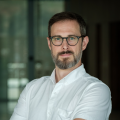
Ibai Laña Aurrekoetxea
Mondragon Unibertsitatea, Investigador
Ingeniero informático por la Universidad de Deusto (2006), y doctor en Inteligencia Artificial por la Universidad del País Vasco (2018). Actualmente es investigador en el grupo Mathmode y docente investigador en Mondragon Unibertsitatea. Sus intereses de investigación se sitúan en la intersección de los Sistemas de Transporte (ITS), el aprendizaje automático, el análisis de datos de tráfico y la ciencia de datos. Ha abordado problemas de predicción del tráfico urbano, en los que ha aplicado modelos de aprendizaje automático y algoritmos evolutivos para obtener predicciones a más largo plazo y más precisas. Su trayectoria más reciente se ha centrado en el modelado de sistemas complejos mediante redes neuronales de grafos (GNN) y en el desarrollo de técnicas de explicabilidad (XAI) para modelos de inteligencia artificial. Ha liderado proyectos técnicos de IA y cuenta con una amplia experiencia en optimización heurística y analítica predictiva y eficiencia operativa

Belen Muñiz Villanueva
Licenciada en Matemáticas, Doctora en Tecnologías Informáticas Avanzadas, Máster en Finanzas Cuantitativas y Programa Big Data & Business Analytics. Directora general del Eustat - Instituto vasco de Estadística desde 2024. Anteriormente ha sido Coordinadora I+T y Docente investigadora en Mondragon Unibertsitatea (2020-2024), Data Scientist en Laboral Kutxa (2012-2020), Model owner en Banco Santander (2009-2012), consejera senior en Cognodata (2009) y en Management Solutions (2006-2009). Certificaciones: SAS Programming: essentials, SAS Programming: Data Manipulation Techniques, Certificación CDMP: Associate y Data Spaces Fundamentals IDSA.

Irantzu Sádaba Zubiri
Irantzu Sadaba Zubiri es ingeniera química y doctora en química física aplicada y catálisis. Actualmente es jefa de la Unidad de Transformación Digital y Servicios Tecnológicos de la Agencia Europea de Medio Ambiente (EEA) en Copenhague. En este cargo, ha desempeñado un papel clave en el impulso de iniciativas transversales de digitalización, incluyendo proyectos de innovación y transformación de los servicios digitales, la coordinación de las actividades de inteligencia artificial y la gestión del equipo de tecnologías de la información y las comunicaciones. Antes de incorporarse a la EEA, Irantzu ocupó diversos puestos en organizaciones tanto públicas como privadas, entre ellas el Programa de las Naciones Unidas para el Desarrollo (PNUD) y Topsoe A/S en Dinamarca. Cuenta con una amplia experiencia en la dirección de equipos diversos, la ejecución de proyectos complejos de digitalización y la definición de estrategias de tecnologías de la información y de negocio.

Laura Santamaria Moreno
Universidad del País Vasco, Ikerbasque Research Fellow
Ingeniera Química, Máster en Ingeniería de Procesos Químicos y Desarrollo Sostenible y Doctora en Ingeniería Química. He desarrollado mi trayectoria investigadora, pre y postdoctoral, en el Grupo de Procesos Catalíticos y Valorización de Residuos del Departamento de Ingeniería Química de la EHU. En 2025 obtuve la beca postdoctoral Junior Leader “Retaining” de la Fundación “la Caixa” y desde 2026 soy Ikerbasque Research Fellow. Mi investigación se centra en la valorización de residuos (plásticos, biomasa y lodos de depuradora) mediante pirólisis, gasificación y reformado catalítico para la obtención de H₂, combustibles y productos de alto valor añadido, contribuyendo al desarrollo de biorrefinerías y a la economía circular. Mi tesis doctoral, reconocida con Cum Laude, Mención Internacional y Premio Extraordinario, se enfocó en el diseño de catalizadores para estos procesos. He publicado más de 50 artículos en revistas de alto impacto y participado en proyectos autonómicos, nacionales y europeos, además de realizar estancias de investigación en Alemania, Australia, China y Hungría. Compagino la investigación con la formación y divulgación científica, supervisando tesis y TFGs y participando en iniciativas dirigidas a la ciudadanía
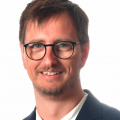
Marc Vilahur Chiaraviglio
Marc Vilahur Chiaraviglio has been Director General for Environmental Policies at the Government of Catalonia since 2022. Holding a degree in Environmental Sciences, he has extensive experience in biodiversity conservation and sustainable development in Catalonia. Throughout much of his professional career, he has led projects related to the ecological transition both within the environmental third sector and public administration, promoting environmental innovation and the modernization of public governance. In this field, he has played a key role in advancing the transformation of environmental policies towards data-driven, complexity-based, cross-cutting and efficiency-oriented management models. He has promoted the application of Post-Normal Science within the Catalan Government administration, as well as process-oriented biodiversity conservation and the ethical use of AI for biodiversity conservation. The SINATCAT IA project received the 2025 Best Cases Awards granted by the European Commission. In his academic and outreach activities, he has collaborated internationally in conferences, seminars and training programmes related to sustainability and environmental governance.
Registration fees
| Face-to-face | Until 09-09-2026 |
|---|---|
| 30,00 EUR | |
| 20,00 EUR | |
| 20,00 EUR | |
| 20,00 EUR |
Venue
Bizkaia Aretoa-EHU
Avenida Abandoibarra, 3. 48009 Bilbao
Bizkaia
Bizkaia Aretoa-EHU
Avenida Abandoibarra, 3. 48009 Bilbao
Bizkaia
Sustainable development goals
Agenda 2030 is the new international development agenda approved in September 2015 by the United Nations. This agenda aims to be an instrument to favour sustainable human development all over the planet, and its main pillars are the eradication of poverty, a reduction in equality and vulnerability and fostering sustainability. It is a unique opportunity to transform the world up to 2030 and guarantee human rights for all.
6 - Clean water and sanitation
Guaranteeing the availability and sustainable management of water and sanitation for everyone. Key issues: universal and fair access at an affordable price, access to sanitation and hygiene services, water quality, efficient use of water resources, end-to-end management, protection of water ecosystems, reduction of pollution, elimination of waste discharges, wastewater treatment.
More information
7 - Affordable and clean energy
Guaranteeing access to affordable, reliable, sustainable and modern energy for everyone. Key issues: universal access, increased proportion of clean energies, energy efficiency, research, fostering investments in energy infrastructures and clean technologies, modern and sustainable energy services.
More information
11 - Sustainable cities and communities
Make cities and other human settlements inclusive, safe, resilient and sustainable. Key issues: access to suitable housing and basic services that are secure and affordable, suitable and sustainable transport systems, inclusive urban planning, participative planning and management, protection of cultural and natural heritage, air-quality, green zones, and connections between urban, peri-urban and rural areas.
More information
12 - Responsible consumption and production
Guarantee sustainable modalities of consumption and production. Key issues: sustainable management and efficient use of natural resources, reduction of chemical particles released to the atmosphere, water and soils, reduction of waste products, recycling, reuse and reduction, sustainable practices, sustainable public procurement, sustainable lifestyles, rationalisation of inefficient subsidies for fossil fuels.
More information
13 - Climate action
Adopt urgent measures to combat climate change and its effects. Key issues: mitigation, resilience and capacity for adaptation, planning, national strategies and plans, education and raising awareness, reduction of effects and early warning systems, compliance with the Framework Convention of the United Nations on Climate Change.
More information
14 - Life below water
Conserve and sustainably use the oceans, seas and marine resources for sustainable development. Key issues: reduction of marine pollution and acidification of the oceans, protection of marine ecosystems, re-establishment of the health and productivity of the oceans, conservation de coastal and marine areas, elimination of over-fishing and poaching, support for traditional fishing, increased scientific knowledge.
More information
15 - Life on land
Protect, establish and foster the sustainable use of terrestrial ecosystems, manage forests sustainably, fight desertification, hold back and reverse the degradation of land and delay the loss of biodiversity. Key issues: the fight against desertification, reforestation, conservation, the regeneration and sustainable use of terrestrial ecosystems, natural habitats, biodiversity, invasive exotic species, integration of the values of ecosystems into planning, poaching.
More information